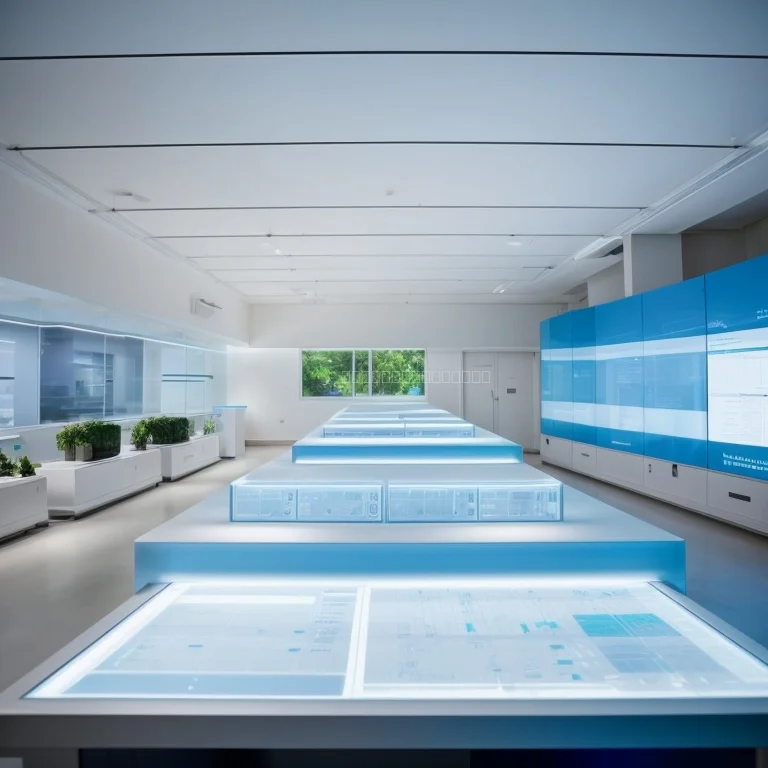
Unlock True Value with Lab-Based Planning

TrueLabon applies rigorous testing and iteration to planning, helping you make informed decisions rooted in measurable insights.

A Scientific Path to Smarter Planning

TrueLabon redefines strategic planning by bringing a laboratory mindset to project development. Our process involves designing controlled experiments, collecting real-world data, and refining strategies based on evidence. Leaders gain clarity on which initiatives yield the most meaningful outcomes and can adjust course confidently.

1

Experimental Design

We structure planning like scientific research, defining hypotheses, controls and variables to assess potential initiatives in a low-risk environment.

2

Data-Driven Insights

Each phase generates actionable information, revealing patterns and trends that inform decisions without relying on assumptions.

3

Iterative Refinement

Through continuous cycles of testing and adjustment, we help you evolve concepts into robust, scalable solutions tailored to your goals.

4

Cross-Functional Collaboration

Our methodology brings together diverse teams for joint experimentation, ensuring that multiple perspectives shape outcomes.

By treating planning as an experiment, teams can uncover genuine drivers of success. The lab-based model reduces uncertainty and elevates confidence, empowering stakeholders to focus on what truly matters.

Start your lab-based planning journey today


A Scientific Path to Smarter Planning

Ready to Discover True Value?

Contact our experts at TrueLabon to explore how a structured experimentation framework can transform your approach to planning. +1 (416) 478-8296

Contact

Meet Our Team

Scientists, strategists and facilitators dedicated to clarity

Dr. Isabel Chen

Dr. Isabel Chen

Lead Experimental Strategist

Dr. Chen has over a decade of experience in experimental design and organizational research, guiding teams through evidence-based decision frameworks.

Michael Thompson

Michael Thompson

Senior Data Analyst

Michael specializes in translating complex data sets into clear, actionable insights that drive strategic clarity.

Daniel Rodriguez

Daniel Rodriguez

Collaboration Facilitator

Daniel brings expertise in cross-disciplinary workshops, ensuring stakeholders align on objectives and experiment outcomes.

Key Benefits

Why organizations choose a lab-based planning approach

Reduced Uncertainty

By validating ideas through small-scale tests, potential pitfalls are identified and addressed early in the process.

Minimize surprises before full-scale rollouts

Adaptive Strategies

Dynamic iteration means plans evolve based on real feedback, not static forecasts.

Stay agile with evidence at every step

Precision in Experiment Planning

Design experiments with precise variable control using lab-grade protocols and automated logging.

Reduce manual setup time by 30%

Data-Driven Protocol Optimization

Leverage real-time metrics and analytics to refine procedures, ensuring each step is optimized for accuracy.

Continuous feedback loops

Collaborative Workflow Coordination

Enable cross-team collaboration with shared project dashboards and role-based access to experimental data.

Unified lab environment

Risk Mitigation and Compliance

Integrate safety checks and regulatory standards into planning, minimizing oversights and audit delays.

Built-in compliance review

Deep Dive into Lab Planning Best Practices

Explore an in-depth guide outlining steps for creating robust testing strategies that align with organizational goals. From initial hypothesis formulation to final result validation, our resource covers every detail necessary for a seamless research workflow. Learn how to anticipate bottlenecks, allocate resources efficiently, and document processes comprehensively for reproducible outcomes.

Hypothesis Structuring

Hypothesis Structuring

Break down research questions into testable components and define clear success criteria to maintain focus throughout the planning stage.

Read the full guide
Resource Allocation

Resource Allocation

Assign equipment, personnel, and time blocks effectively to prevent scheduling conflicts and ensure the availability of critical materials when needed.

Read the full guide
Outcome Documentation

Outcome Documentation

Implement systematic logging templates that capture both expected and unexpected observations, enabling thorough post-experiment analysis.

Read the full guide

We’d love to hear from you

Reach out with any questions about our lab-based planning services.

  • Location: 301 Front St W, Toronto, ON M5V 2T6, Canada
  • Business ID: 074863484
  • Operating Hours: Mon–Fri 9:00am–5:00pm ET
Case Study

Transforming Lab Workflow at TrueLabon

When a research team at TrueLabon faced recurring delays due to ad hoc scheduling and inconsistent protocol usage, they turned to our planning platform.

Within three months, standardized procedure templates and real-time adjustments reduced error rates and improved project visibility across departments.

Start Completion
See how it works
Step 1
Define Objectives
Clarify goals and success metrics before initiating any experimental plan.
Step 2
Outline Workflow
Map out each procedural step, assigning roles and checkpoints for quality control.
Step 3
Review and Adjust
Use iterative feedback to refine plans based on interim results and stakeholder input.